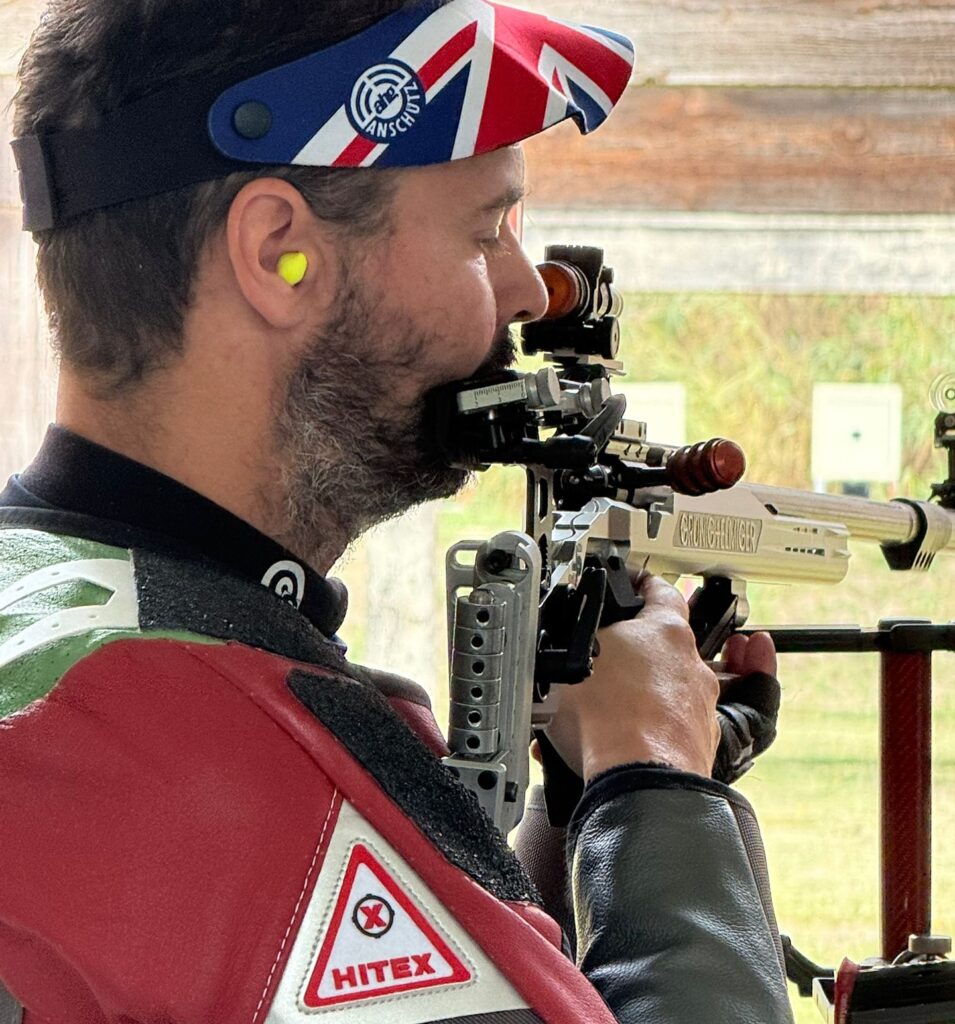
Lewis Craddock looks forward to 2026.
With the new year comes New Year’s resolutions. Most of them will be forgotten by February so let’s instead talk about a New Year’s goal and more importantly a New Year’s goal with purpose.
When we talk about goal setting as a sports coach, there are three types of goals that athletes should understand. These are Outcome goals, Performance goals and Process goals.
Outcome goals are your destination. These are what you want, whether that’s winning a Welsh title shooting qualify score or making a final. They give you something to aim for.
Performance goals describe what the standard you need to reach to get your outcome goals. They give you the path which you must follow, whether that be the scores, consistency or a technical benchmark, or answer the question ‘what do I need to achieve’.
Process goals are the day-to-day actions that move you forward. These are the habits, sessions drills and behaviours that will move you towards your performance goals. These are what you must do to achieve.
So how do we do this in practise?
Research show us that writing goals down increases the likelihood of achieving them. So let’s get a pen and paper or better yet, let’s get your training diaries out and write in them.
Start with your outcome goal. Be honest with yourself. Maybe its to become a Welsh champion. Maybe its to get to a score you would like to achieve. Maybe its something as simple as I would like to consistently shoot in competitions. Whatever it is, let’s write it down. Now look at what your outcome goal is and let us all ask the question’ what do I need to do to achieve that’. If your goal is to become world champion then you must outperform all the other athletes at the Welsh air open.
That immediately leads you into your performance goals. What is the rough score that you’ll need to achieve this, what consistency do you need in your training, what technical level will be required to attain that? What standard, which you realistically have to be at, to become a Welsh champion? Again that leads us into the next question of what you have to do to get to those standards.
This is where process goals come in, structured training and purposeful sessions built around actual needs. Improving these might be technical execution, such as triggering breathing control. It might be physical capacity. This is more strength and conditioning. Do you start flagging after 20 shots. Can you sit there and shoot a 60 shot match plus sites without physical discomfort. It might be mental capacity. Can you concentrate and focus for sixty shots. Do you need to work on the mental aspect of your game, meditation, visualisation, positive self talk. Or do you need to work on competition habits. Have you keyed in your pre match nutrition and hydration. Do you get a good night’s sleep before competition or do you spend the night night worrying, panicking, scrolling on your phone. Do you actually have a pre match routine or do you just rock up and hope. These would all be areas that you would be able to make process goals from, such as I will improve my follow through for each shot I take. I will do a daily meditation to calm my mind. I will stick to my pre match routine so that I go in consistently with the right frame of mind but whatever it is these are your day-to-day workhorse goals. If you’re unsure on what to work on or you feel stuck ask your coach. That’s what we’re there for.
Now we work on timings for our goals because if we don’t have a deadline to achieve them then it’s just a wish not a goal. We first look at our outcome goals. They tend to be long term so we’re looking at a year or longer to achieve these. They tend to stay the same as we train but when we look at performance and our process goals these might change. Therefore it’s best to review these every 30 to 60 days and adjust according to what you’re new needs might be.
There are many different types of frameworks for goal setting. One of the more popular ones are smart goals or smarter goals. We’re all different and we all work in different ways, so if these will help you, use them. If you find they don’t help you, they don’t use them. This is your journey and the style only matters if it works for you.
One final point
It doesn’t have to be perfect. Waiting for perfection is just procrastination. Saying I’ll start next Monday because I should have more time is just delaying. So why not start today.